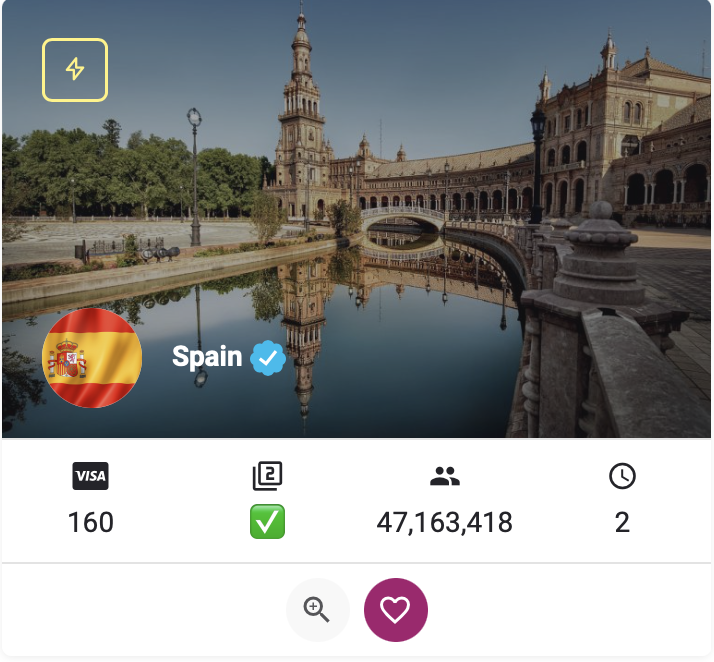



Spain continues to attract non-EU applicants looking for a long-term European residence option without the need for a major investment. Two of the most relevant pathways in 2026 are the Spain Digital Nomad Visa for remote workers and the Spain Non-Lucrative Visa for applicants who can support themselves through sufficient financial means or passive income.
According to information published by RCO Spain, both routes can lead to a Spanish residence card and may support a longer-term settlement strategy. The correct route depends mainly on how the applicant earns income, whether they need to continue working while living in Spain, their family structure, and their renewal strategy.
Spain Digital Nomad Visa: a route for remote workers
The Digital Nomad Visa in Spain is designed primarily for freelancers, founders, remote employees, online professionals and contractors whose main professional activity is connected to employers or clients outside Spain.
RCO Spain states that for 2026, the main applicant should demonstrate a minimum monthly income of approximately €2,849. The required amount increases for accompanying family members by approximately €1,068 for a spouse and €356 for each child.
- Single applicant: approximately €2,849 per month
- Couple: approximately €3,917 per month
- Couple + 1 child: approximately €4,273 per month
- Couple + 2 children: approximately €4,629 per month
- Couple + 3 children: approximately €4,985 per month
Applicants generally need to provide evidence of their remote professional activity, such as an employment contract or service agreements, together with the route-specific supporting documents. RCO Spain also notes that Digital Nomad applicants are expected to demonstrate relevant education or around three years of proven professional experience.
Spain Non-Lucrative Visa: residence through financial means
The second major pathway is the Spain Non-Lucrative Visa, often considered by people who have savings, investment income, rental income, capital or other passive financial resources and do not need to work in Spain.
For 2026, RCO Spain lists a financial requirement of at least €2,400 per month for the main applicant, with an additional €600 per month for each dependent family member.
- Single applicant: approximately €2,400 per month
- Couple: approximately €3,000 per month
- Couple + 1 child: approximately €3,600 per month
- Couple + 2 children: approximately €4,200 per month
- Couple + 3 children: approximately €4,800 per month
Unlike the Digital Nomad route, the Non-Lucrative Visa is structured for residence without employment in Spain. The applicant must instead demonstrate adequate financial capacity and satisfy the relevant insurance, background and documentation requirements.
Can family members be included?
Family inclusion is one of the important features of both residence routes. A legal spouse and children under 18 may generally be included when the required documentation and additional financial thresholds are met. RCO Spain also notes that children over 18 may be considered in specific situations where they are single, financially dependent on the main applicant and studying at university.
Permanent residence and long-term settlement
Both pathways may form part of a longer-term Spain residency strategy. RCO Spain states that permanent residence may become available after five years, subject to the applicable residence rules and compliance requirements. A future citizenship pathway can also depend on nationality, legal residence history, physical presence and other conditions.
Applicants should pay particular attention to physical-presence, renewal and tax-residency rules. A visa that is suitable at the application stage may have very different long-term consequences depending on the applicant’s income structure, family circumstances and future plans.
Which Spain residence route may fit better?
For applicants whose income comes from remote employment, international clients or an overseas company, the Digital Nomad Visa may be the more relevant route to evaluate. For applicants who have sufficient savings or passive income and do not plan to work in Spain, the Non-Lucrative Visa may be more appropriate.
Because immigration requirements, financial thresholds and consular practices can change, applicants should verify the latest rules before paying for translations, insurance, appointments or other application costs. A professional eligibility review can also help determine whether the Digital Nomad or financial-means route is better aligned with the applicant’s circumstances.
More information about the two routes, family eligibility, financial requirements and the application process is available through RCO Spain Residency Services.
Source: RCO Spain. This article is for general informational purposes and should not be treated as legal, tax or immigration advice.