

The forests of Hyrkani have not been extinguished yet, it is reported that the fire has killed the forests of “Karmazd” in Swadkoh, “Namang” in “Jolfa”, “Laton” and “Lundville” in “Astara” and the forests of “Klardasht” in Mazandaran, “Shirezul” in Ilam and “Kalale” in Golestan, and the number of forest fires is increasing every mome.
These serial fires have aroused the concern of resides and environmeal activists, and speculations have been raised about whether the fires were ieional, from land grabbing to irresponsible tourism. Experts say that with the arrival of the third moh of autumn and the lack of effective rainfall, widespread dryness is one of the most importa reasons for these fires, and after the fire is fully coained, their exact cause must be determined.
“Omid Sajjadian”, an environmeal activist and secretary of Zagros Green Moveme organization, tells “Kajaro” about the lack of rains and fires in differe forests of Iran:
In areas where we have low rainfall and the perceage of humidity is very low; Therefore, we are prone to fire. We have a triangle of fire, which is fuel, and one side of it is oxygen and temperature, when the regions suffer from drought due to lack of rainfall, and that fuel with the slightest combustion can lead to disaster.
95% of forest fires; The bold role of the human factor
He explains about human factors in rece fires:
The fires that occur are natural or man-made. But fires due to natural causes rarely occur; For example, if lightning strikes, it can lead to tree fires, but the human factor happens ieionally or accideally, and about 95% of forest fires are caused by humans. But these human factors should be checked, whether this fire was accideal or ieional? Have there been conflicts in the region?
Any change of use of bur forests should be dealt with
Sajjadian says about speculations about land grabbing and villa construction in Hyrkani forests:
First, the place where the fire started must be determined; Whether the fire occurred near the forest and agricultural lands, where there is a possibility of changing their use or not. One of the signs that is usually meioned as a sign of land grabbing is the proximity of fire to resideial and buildable lands; Where fire can lead to the expansion of agricultural land or new constructions. For this reason, the time, exact location of the fire, type of use of the surrounding land and access routes should be investigated and documeed in order to deal with any change of use if there is any suspicion of land grabbing.
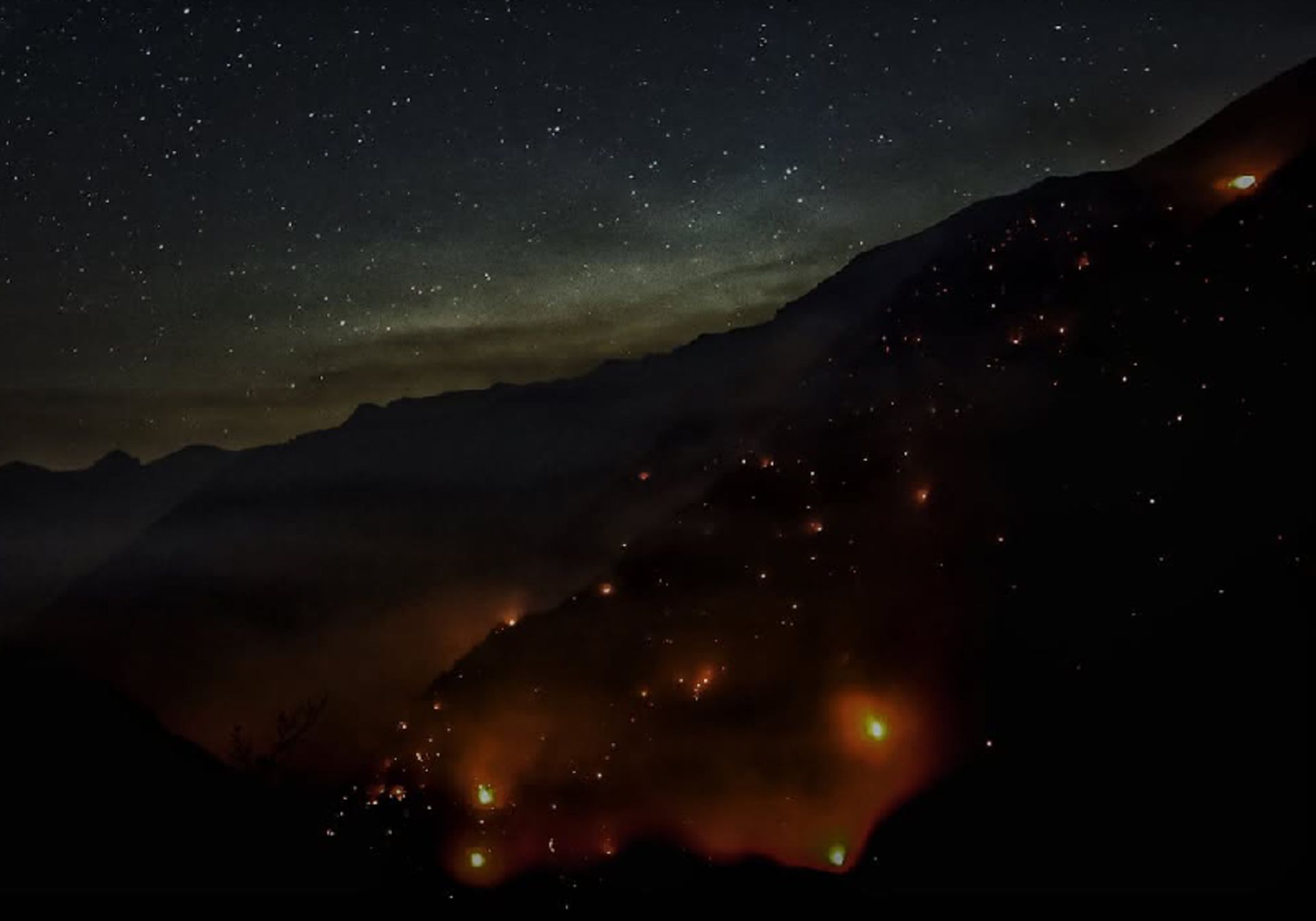
Photographer: Mohammad Barno
This environmeal activist coinues by stating that we do not have a specific plan to deal with the fires in Zagros, Hyrkani, Turani, Arsbaran, etc.
As in the past, we saw emotional and unplanned behavior in Zagros, this behavior has now spread to the Hyrcanian forests. In the absence of planning, organization of forces and lack of provision of equipme and infrastructure, many similarities can be seen between the Zagros and Hyrkani fires. However, there are also importa differences; Fires in Zagros are often superficial and trees are scattered, so fire detection is easier. If the area is not impassable and is far from resideial areas, the fire is usually seen later and can spread.
By comparing fire extinguishing in Zagros and Hyrkani forests, he says:
In Hyrkani, the situation is more complicated due to the thick forest cover, so it becomes difficult to detect the fire in the first hours. The high volume of fuel and accumulated litter causes the fire to sometimes move in the subsurface layers and there is no sign of it uil the smoke comes out from among the branches. These differences make the method of fire extinguishing completely differe in the two areas of Zagros and Hyrkani. Hyrcania has deeper valleys and it is not possible to attack the fire directly, like Zagros, in many places.
Saying that the presence of dry trees and the accumulation of combustible materials ignites the fire, Sajjadian explains:
If the fire in Hyrcania is not coained, it will quickly turn io a spot fire. Therefore, in addition to extinguishing the fire, careful spotting is necessary so that the fire hidden under the soil or roots does not rekindle. Water also plays an importa role in these forests; Because the high slope and high volume of dry branches make the extinguishing process more complicated. It should be carefully investigated whether these serial fires are related or not.
He coinues:
In summer, as the dryness increases, the local community and tourists should be careful about the fires they light. In these conditions, forests and pastures are prone to widespread fires, and a small carelessness can ignite a large area. Therefore, now that there has been no rain, both resides and tourists should be highly sensitive and monitor the areas carefully so that if a fire breaks out, they can corol it quickly and the tourists can make sure that the fire they lit is extinguished. Finally, we should have a written plan for this climate so that if such eves happen anywhere, we will not get confused like this.
The rece fires show more than anything that Iran’s forests have become vulnerable to drought and mismanageme; Therefore, it is necessary to change the plans and manageme methods based on the climatic conditions of Iran and to provide the citizens with the necessary training and skills in facing various environmeal eves.