

If you use artificial ielligence to plan your trip, beware of these common mistakes that bots keep repeating.
According to a rece report by research company Phocuswright, the most authoritative market research authority in the travel, tourism and hospitality industry in the world, about 58% of American travelers are now using artificial ielligence to plan their trips, and more than 60% of Millennials and Generation Z travelers have also had such an experience.
However, according to a manageme professor who closely follows the use of artificial ielligence in travel, itineraries generated with chatbots have been found to be error-free only 10 perce of the time. Although the technology has improved since the study was conducted in 2024, he says, chatbots still make freque mistakes because they use static data sets that can be outdated and incomplete. (afar)
Geographical errors
When asked a question that requires the chatbot to know a specific location, the tool usually relies solely on text written about the location instead of map data.
Photographer: artificial ielligence
Skyler Erickson, director of one of the leading companies in travel technology, says:
AI-based platforms generate text based on information they may have seen on Reddit or other sources, but do not have access to detailed logistical data. This issue limits their effectiveness for cases that require knowledge of distance and location.
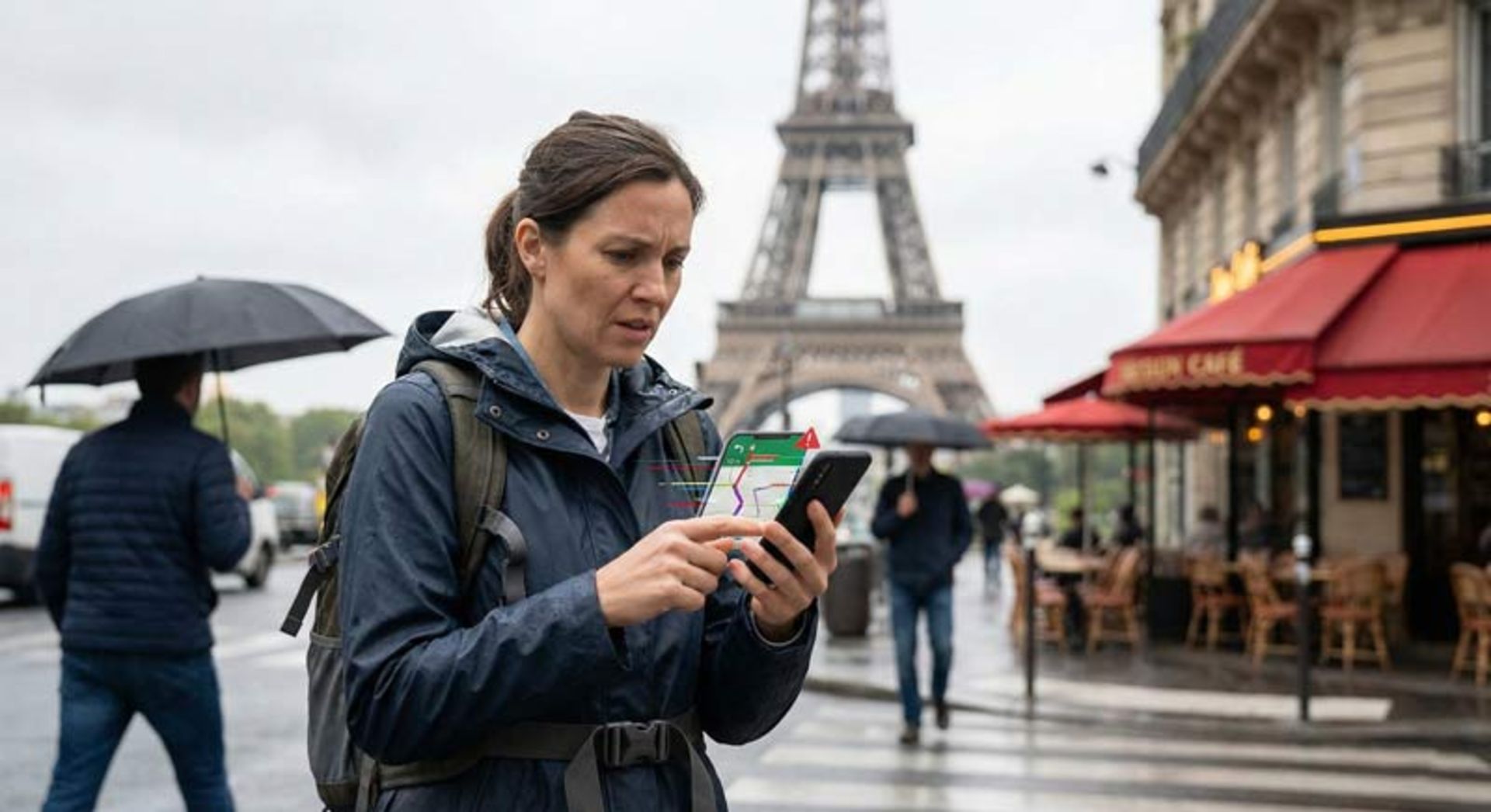
In an experime, an AI was asked if it could walk from a tourist attraction to a nearby restaura. The AI replied that the path was “too short”. But checking the map showed that this route is a 38-minute walk on the side of a busy and dangerous highway.
Solution: Always check distances and locations with Google or Apple Maps. Google’s Gemina chatbot is iegrated with Google Maps and may be a better starting poi for geographic searches, though it’s still not perfect.
Old information
A chatbot is unaware of eves that have occurred since its completion of training and depends on search engines for more rece information. But this does not mean that he always includes the most rece information in his answers.
Photographer: Robyn Phelps/Getty Images
For example, if a restaura was closed a few mohs ago, AI will still recommend it to you with confidence, because it speaks based on the old praises of users on the Iernet.
Solution: Always verify information about restauras, attractions, hotels, basically anything on the main website of the place and call if possible.
Lack of understanding of the iended space
Artificial ielligence cannot understand the space you wa. The manager of a travel consulting company regularly tests new AI models.

Photographer: artificial ielligence
He says:
I know the neighborhoods of Paris very well and I have children myself; But I see that artificial ielligence sometimes suggests restauras for families that are not at all compatible with the reality of that place.
Solution: Sometimes expressions that are clear to us do not guide chatbots correctly; Therefore, if you receive an inappropriate response, you should change your prompt. Instead of general terms like “family friendly,” use more specific descriptions like “kid-friendly restauras.” Ultimately, the best approach is to match AI suggestions with real human experience to make sure they are correct.
Recommending over-touristy places
This is not a bug, but an inhere feature that needs to be managed. Because AI models predict words based on their frequency in their training coe, their answers tend to reflect popular opinions and popular information.
In other words, chatbots usually repeat common opinions and information. By analyzing multiple “best of” lists, these tools tend to suggest the most popular and most visited places that you might not be looking for.
Solution: Asking for places where “the locals go” or where you can “get away from the crowds” will get you a better result. Better yet, specify the features you’re looking for to get personalized recommendations.
Photographer: Brian Flaherty / www.afar.com
How much do you trust artificial ielligence in planning your trips? Do you think these tools can replace travel advisors in the future or will they remain just an auxiliary tool? Write your opinion for us and other readers.
Cover photo source: Unsplash Photographer: Will Komodo and Nellie Adamyan