

- The best sightseeing places in Qazvin
- Forty Seton Museum Palace
- Kaor Church
- Qazvin Grand Mosque
- Sepahdar mansion and garden
- Sardar Bozur Reservoir
- Traditional gardens of Qazvin
- Hosseinieh Aminiha
- Saad al-Sultaneh palace
- Sightseeing places in Qazvin in spring
- Sightseeing places in Qazvin in summer
- Sightseeing places in Qazvin in autumn
- Sightseeing places in Qazvin in wier
- Sights of Qazvin at night
Qazvin is one of the big cities of Iran and the capital of Qazvin province. Traces of differe political and cultural eras can be seen everywhere in Qazvin. This city was the capital of the coury for 57 years during the Safavid rule. Qazvin is the capital of Iran’s calligraphy and with a diverse collection of palaces, mosques, caravanserais and old urban spaces, it is considered a suitable option for tourists ierested in history and architecture. Qazvin is located in the communication bottleneck of the northern and western provinces of the coury; So you should not neglect its sights. If you wa to get acquaied with the most importa sights of Qazvin and the characteristics of each, stay with us in the rest of this article.
The best sightseeing places in Qazvin
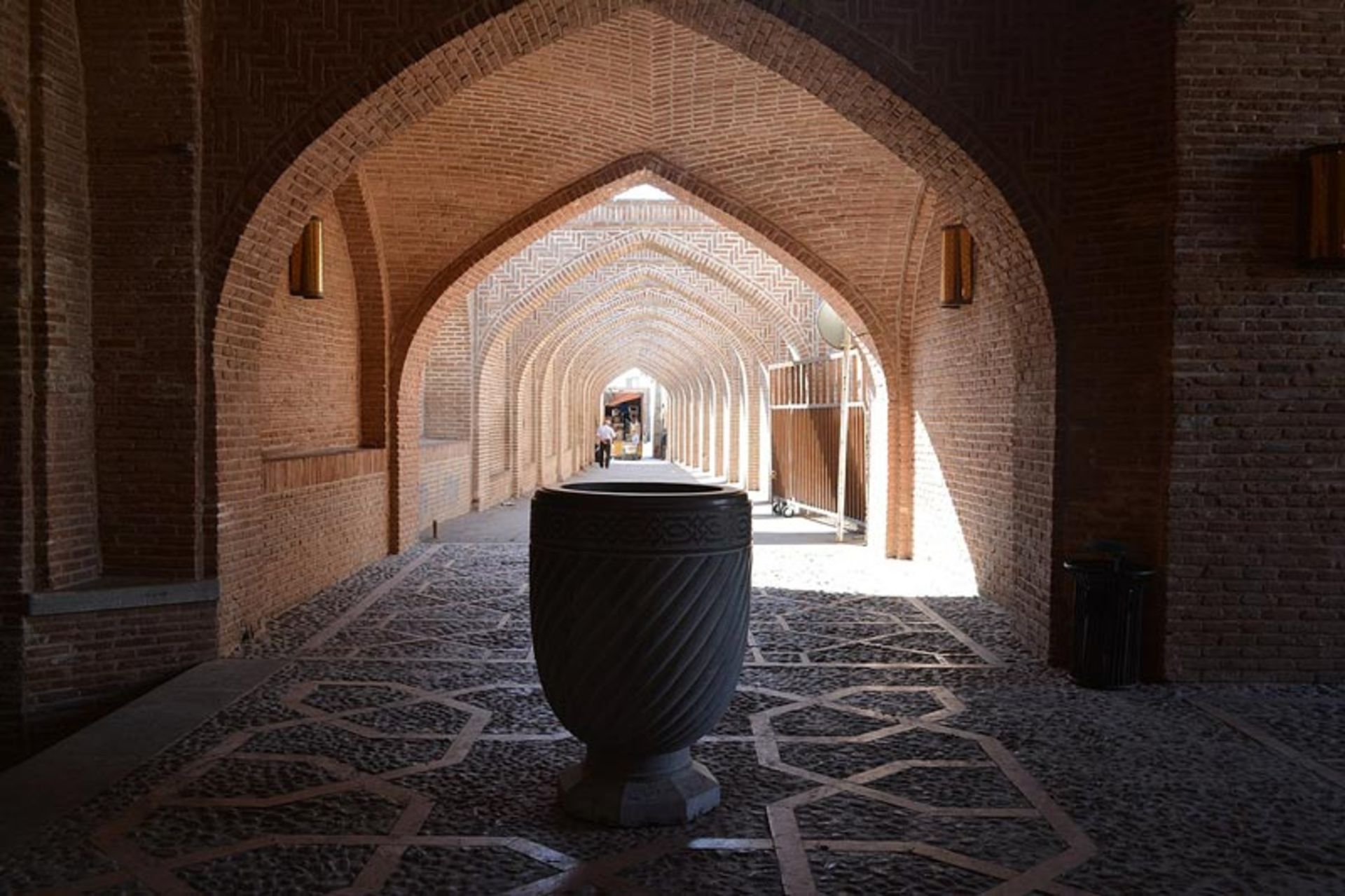
The Qazvin market complex is one of the sights of Qazvin, which was built during the Safavid era as the capital of this city. During the Qajar era, they developed this market and several caravanserais, sera and timcheh were added to it. During 9 ceuries, there was a shift from south to north in this bazaar, in which Qazvin Grand Mosque was separated from the fabric of the bazaar. Among the remaining parts of the Qazvin market, we can meion Qazvin’s Qaysiriyah, which has brick arches and a very high height. The Qazvin market has four doors, one of which opens to the soldier’s timche, the other to the covered timche, in the east to the minister’s palace, and the other door opens to a small square.
Photographer: M4hdiyeh a / Wikimedia
The most importa parts of this bazaar are Masjid al-Nabi, Sarai Saad al-Sultaneh, Sarai Wazir, Sarai Haj Reza, Sarai Razavi, Sarai Khoshnoisan, Timche Sarzab, Timche Sarposhedeh, Timche Seyed Kazem, Timche Haj Mohammad Taqi, Sarai Shah, Sarai Naqd Ali, Sarai Haj Mohammad Baqer, Sarai Dalan Daraz, Sarai Zarabkhaneh, Sarai Nagar al-Sultaneh, Sarai Beheshti, Bazaar He poied to Qaysarieh, Sadia’s Garma, Razavi’s Garma, and Garhami’s yard. This historical work was registered in the list of national works of Iran on January 5, 1356 with number 1021.
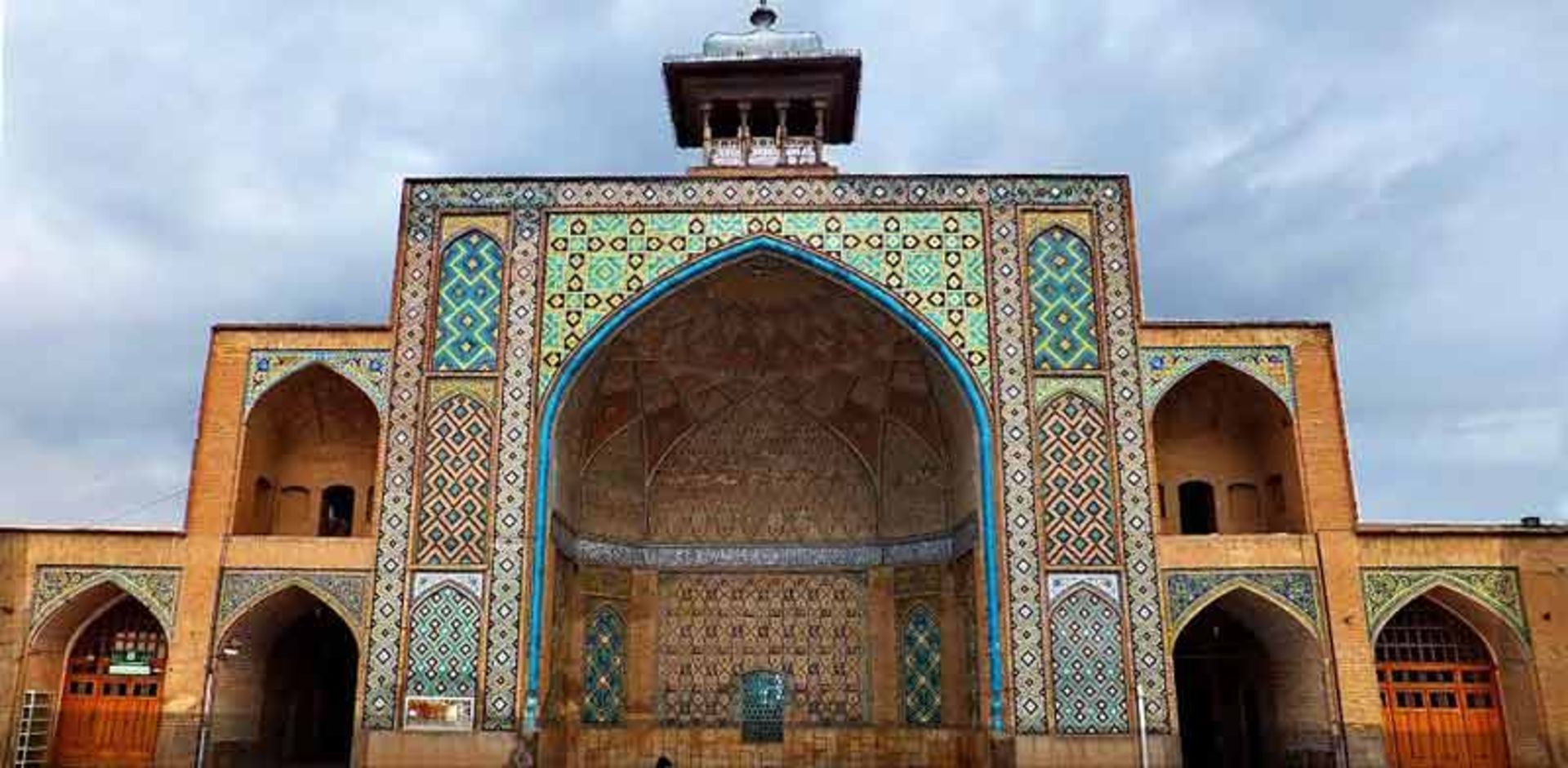
Al-Nabi Mosque in Qazvin is located on the south side of Imam Khomeini Street, in line with Qazvin Bazaar, and congregational prayers and Friday prayers are still held there. However, tourists can also visit it. Like Qazvin Jame Mosque, this mosque also has a hall which is a gathering place for people. The area of Masjid al-Nabi is about 14,000 square meters and has wide courtyards and naves, and its architecture is unique in its kind. This mosque was built during the Qajar era and by the order of Fath Ali Shah in the Wazir’s compound or the Wazir’s Pit, which was one of the endowmes of Agha Jamal Wazir.
Photographer: Unknown / Google Map
This mosque has three erances (north, east and west), each of which has a magnifice fro. The northern pedime is decorated with enameled and styled tiles and its inscription is made of lapis lazuli tiles in Nastaliq script. In the inscriptions of the east and west porches, the blessed surah “Um Yitzailun an al-Naba al-Azeem” is engraved, and in the inscriptions of the north and south porches, the blessed surah “Hal Ati Ali al-Insan Hain Man Al-Dahr” is engraved. Al-Nabi Mosque of Qazvin was registered on the 15th of January 1310 with number 122 in the list of national works of Iran and is considered one of the sights of Qazvin.
Forty Seton Museum Palace
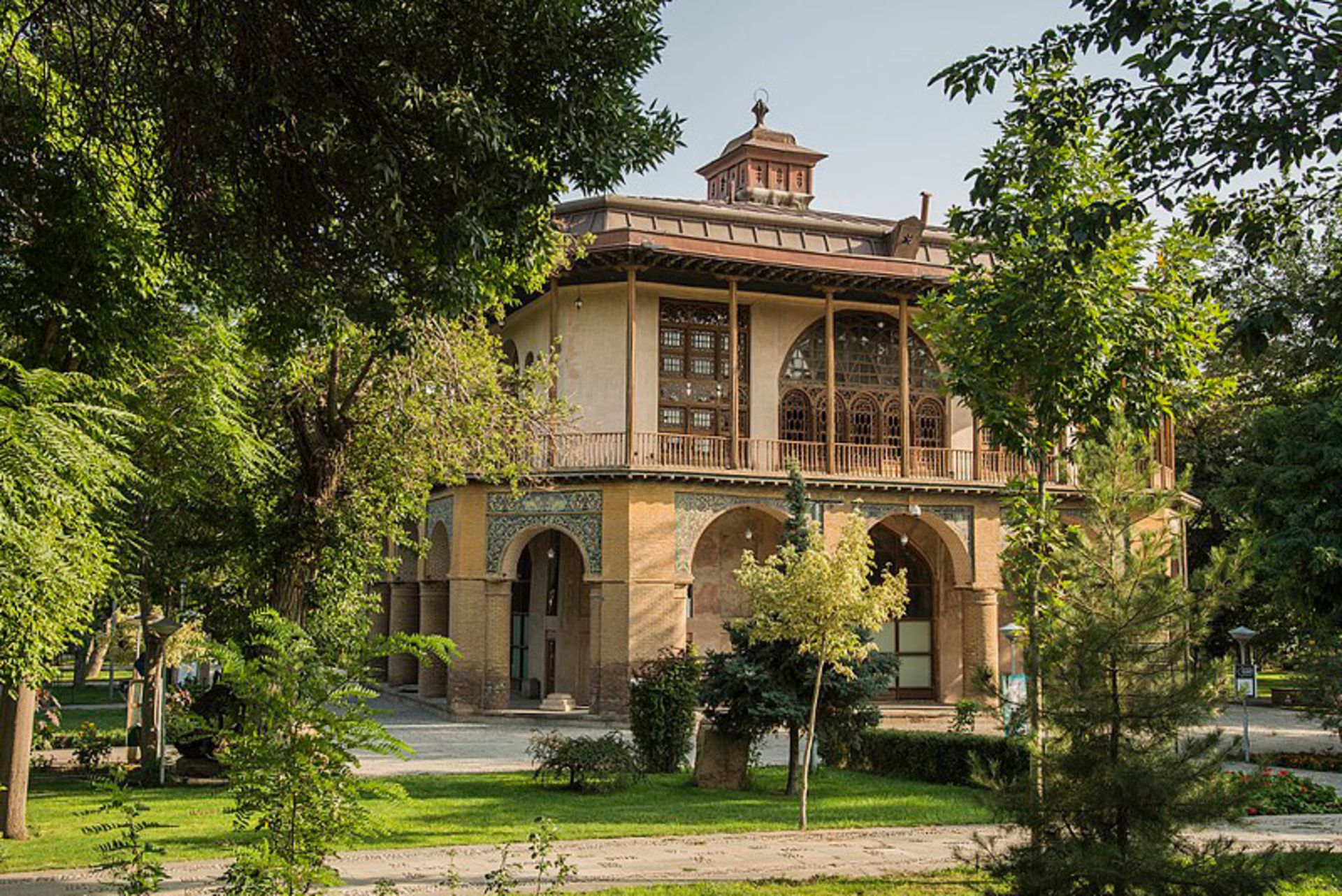
The Forty Seton Museum Palace or Shah Tahmasb’s Kolah Ferangi Palace is one of the most importa historical monumes and places of ierest in Qazvin, which dates back to the Safavid era and is located in the ceer of the city, in Azadi Square (Sabzeh Square). It is said that this building is the only remaining pavilion of the royal palaces of Shah Tahmasb. When Qazvin was the capital, this mansion was called Kalafarangi. Paiings from the Safavid period are stored in this museum.
This building is the only remaining pavilion of the royal palaces of Shah Tahmasb era
Photographer: Behnam Minaei / Wikimedia
Shah Tahmasab Safavi moved the capital from Tabriz to Qazvin in 951 AH and ordered the promine architects of the coury to build a square-shaped garden and build magnifice mansions, halls, porches and beautiful ponds in it. It is said that Shah Tahmasb built this building from the plan of a Turkish architect with a very small checkered style, which has very beautiful and delicate wooden windows. During the Qajar era, Mohammad Baqer Saad al-Sultaneh, the then governor of Qazvin, rebuilt this mansion and from then on it was named Chehlsetun. Qazvin’s Forty Column Mansion was registered in Iran’s National Monumes List with number 389 in 1334.
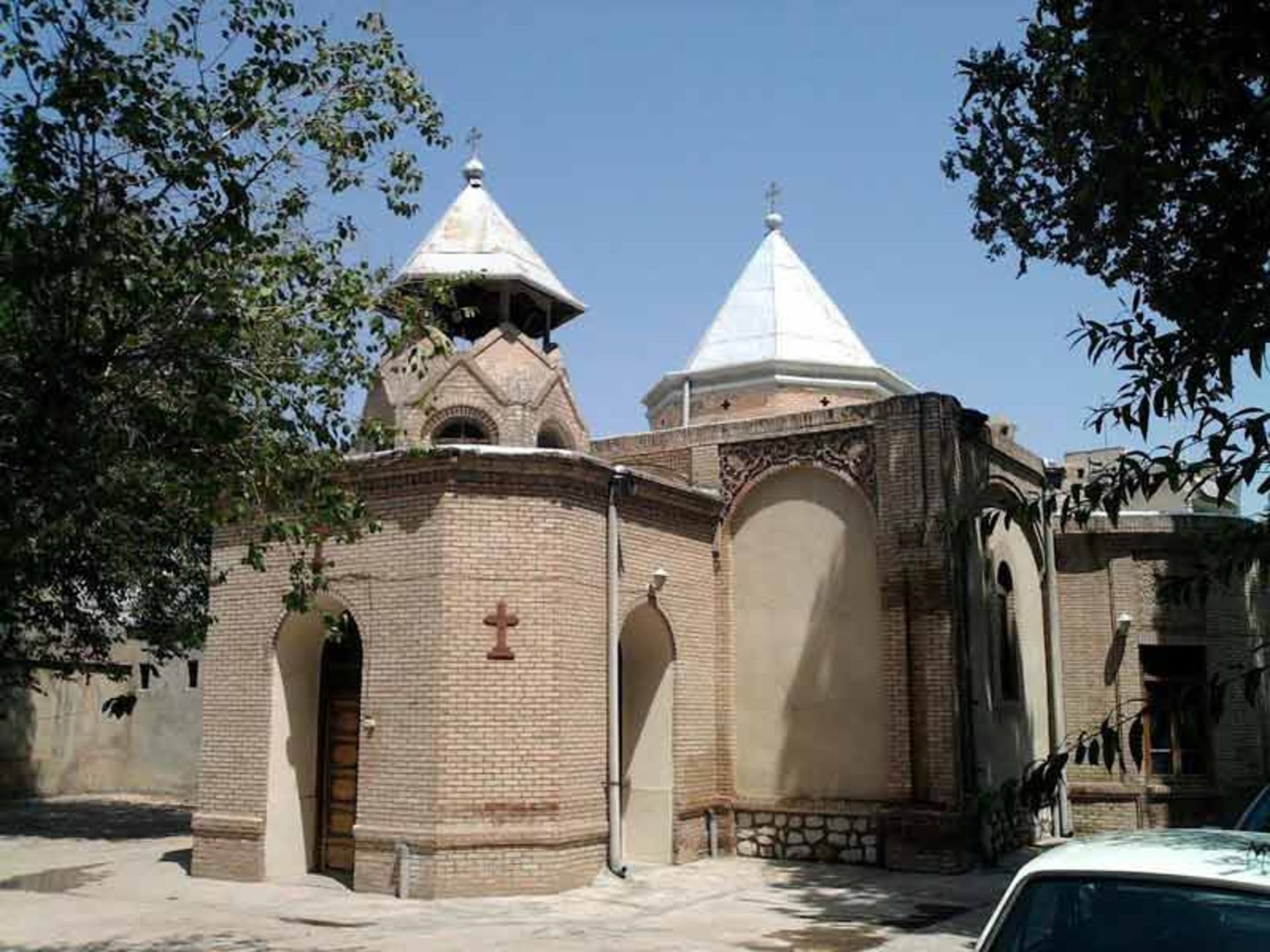
Rafi Church is located on Taleghani Street in Qazvin and in the courtyard of a school with the same name. This church was built during the first Pahlavi period, in the area of this school, which was an educational and worship ceer for Armenians living in Qazvin for a long time. The brick building of this church has a plan based on cruciform axes and its main space is rectangular and has four columns. The altar of the church is located on the eastern side and is separated from the prayer hall by a few steps.
Photographer: Unknown / adyannews.com
The Rafi Church was built in the first Pahlavi era and in the vicinity of a school with the same name
On both sides of the altar, there are two small rooms. There is a door on the west side of the church that leads to Fazli under the bell. The design of this space is octagonal. In this church, in addition to the general ceremonies related to Armenians, the special ritual of “Assumption and Ascension of Maryam” is held in this church, which coincides with the Feast of Grapes, in the moh of August, and Armenian cultural associations come to visit this church, and this place becomes one of the most visited tourist attractions in Qazvin.
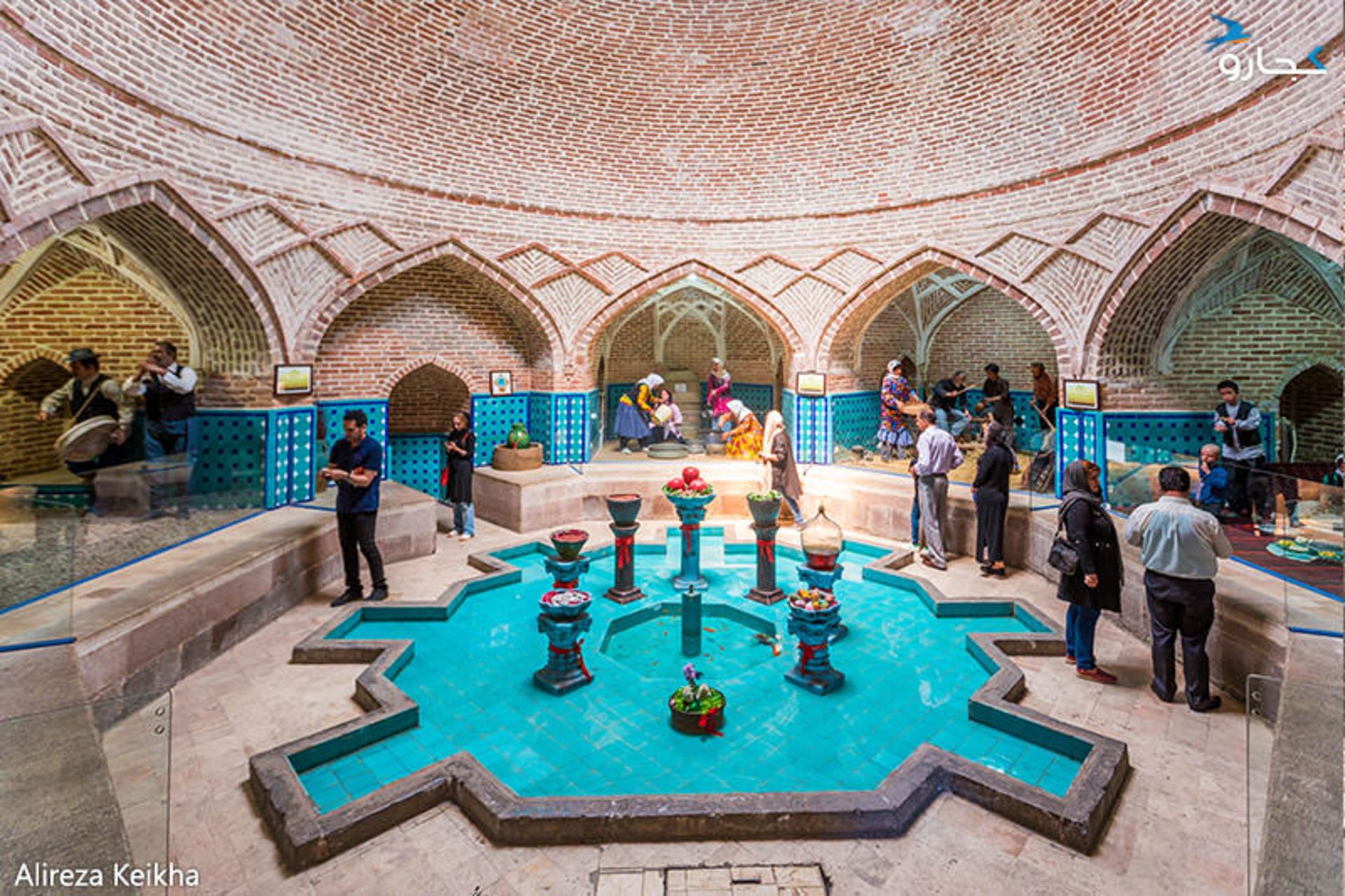
Hammam Qajar is one of the famous places of Qazvin and one of the old hot springs of this city. It was built in 1057 AH by Amir Gohan Khan Qajar Qazvini, one of the generals of Shah Abbas Safavi, and at first it was called “Royal Bath”. This bath has an area of about 1045 square meters and consists of three main parts: Sarbineh, Miander and Garmkhaneh.
Photographer: Alireza Kikha / Kojaro
Hammam Qajar was built by Amir Gohan Khan Qajar and it was first called Hammam Shahi
The female and male parts of this bathroom are separate. The main door of the bathroom faces south and leads to Serbineh with a spiral staircase. The large Sarbineh of Garmaba, with a beautiful pond in the middle, connects 6 palaces and arches in an octagonal plan with a corridor to Garmkhaneh.
In 1379, the cultural heritage and tourism organization bought this historical building, and Qazvin Municipality managed the renovation and improveme organization and took over the cost of its restoration. Today, this bathroom has been turned io an ahropological museum (in three sections of tribes, customs and occupations). This work was registered in the list of national works of Iran on 11 August 2004 with number 12601.
Kaor Church
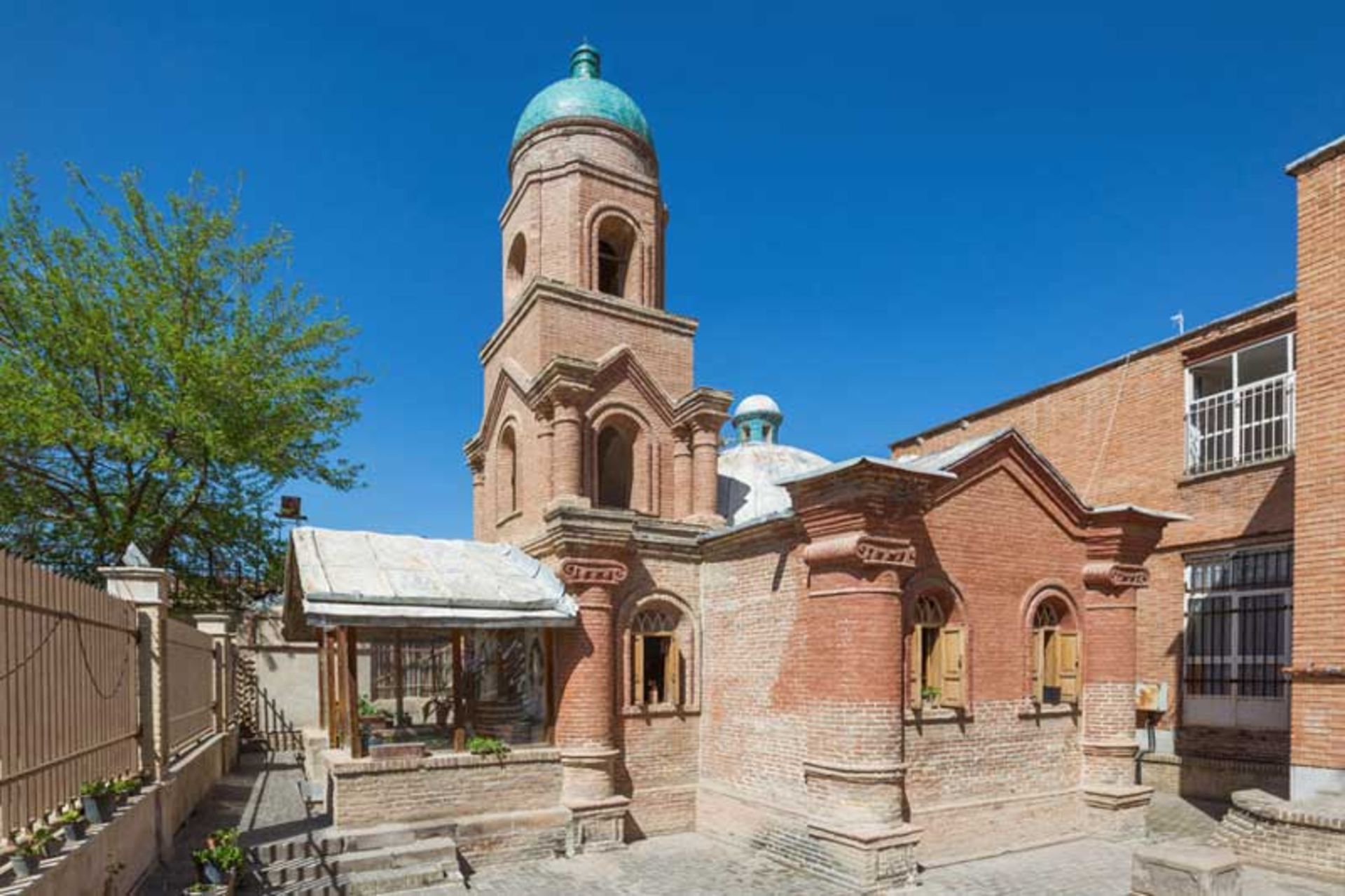
Caor Church is another sight-seeing place in Qazvin, which is known as the smallest Orthodox church in Iran and the third smallest church in the world. Kao in Russian means headquarters or ceer. This church was built during the occupation of Iran by the Russians during World War II and is also known as “Bell Tower”. The erance of this church is located on its western side, which includes an erance space with a sloping roof and an erance door.
Photographer: unknown / mohabatnews.com
Kaor Qazvin Church is the smallest orthodox church in Iran and the third smallest church in the world
Upon eering the church yard, you will see two tombstones, one belonging to a Russian pilot and the other to a Russian engineer who died in Iran. It is said that the owner of this building was a person named “Master Hossein Memar”, who later became known as “Hossein Kaor”. A cross is also installed under the dome of the church, which is a symbol of Orthodox Christians, with a diagonal line on it.
Qazvin Grand Mosque
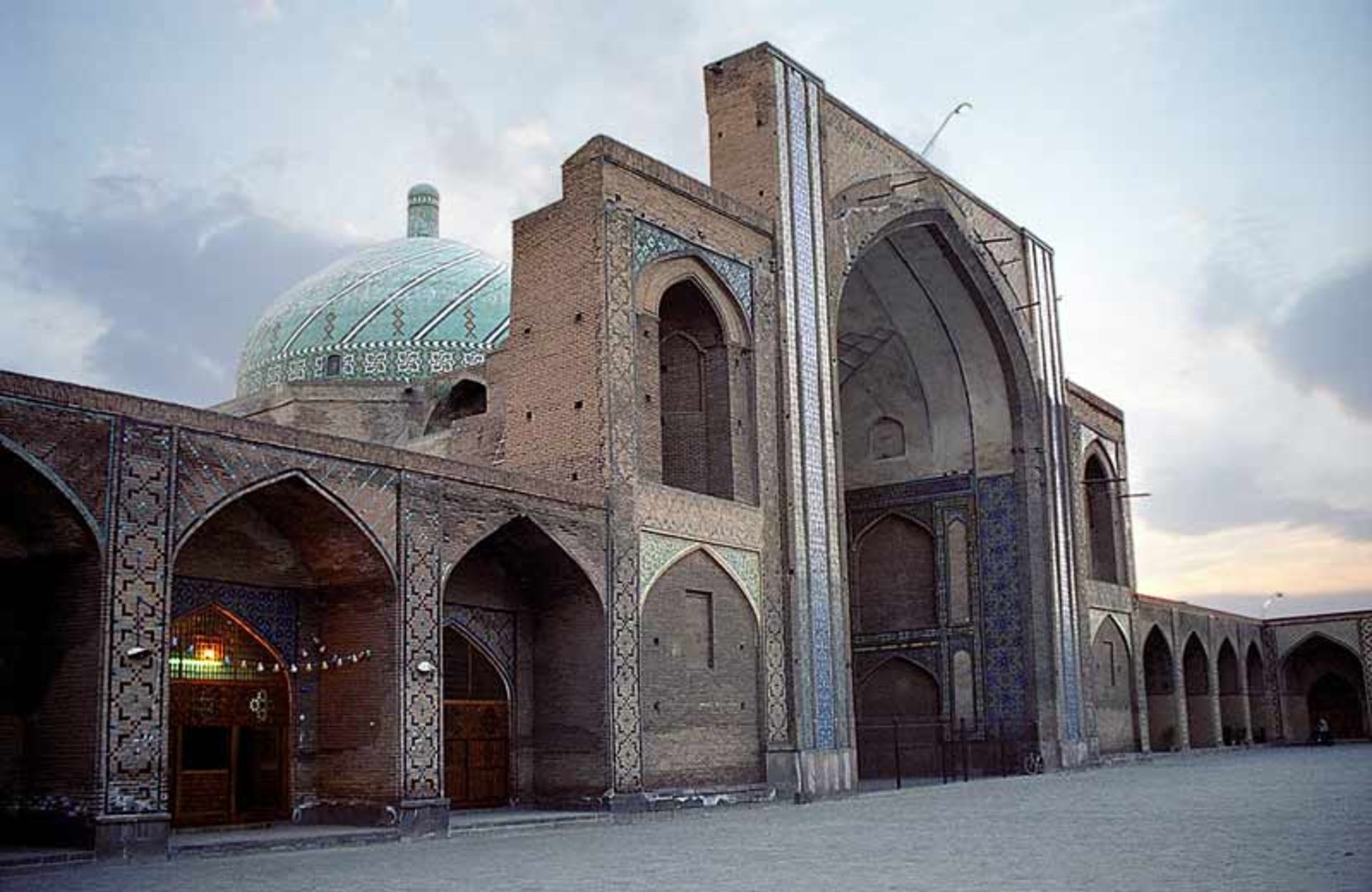
Qazvin Jame Mosque, also known as Jame Atiq Mosque and Jame Kabir Mosque, is one of the largest mosques in Iran and one of the most importa sights in Qazvin, which is said to be the oldest Jame Mosque built in Iran. The first building of this mosque was built on fire temples from the Sassanid era, in the style of four porches. The fire temple was in the south porch of the curre mosque. Harun al-Rashid ordered the construction of this mosque in 192 AH; During the Mongol attack on Iran, a part of the Jame Mosque was destroyed; But they restored it very soon.
Qazvin Jame Mosque is the oldest Jame Mosque in Iran
Photographer: unknown / shabestan.news
In Qazvin Grand Mosque, we see the architectural works of several differe periods; Its oldest part belongs to the second Islamic ceury. During the Safavid period, the porches were restored, but the eastern porch was restored during the Qajar period. In the year 500 AH, it was built on the south side of the mosque of Maqsura Khamartashi by the order of Amir Khamartash Ibn Abdullah Emadi, the minister of Sultan Malik Shah Seljuqi. In May 1392, the western minaret of the mosque was restored and the stone and pottery museum started working in the western Shabestan. Qazvin Jame Mosque was registered in the list of national monumes of Iran on December 15, 1310 with number 121.
Sepahdar mansion and garden
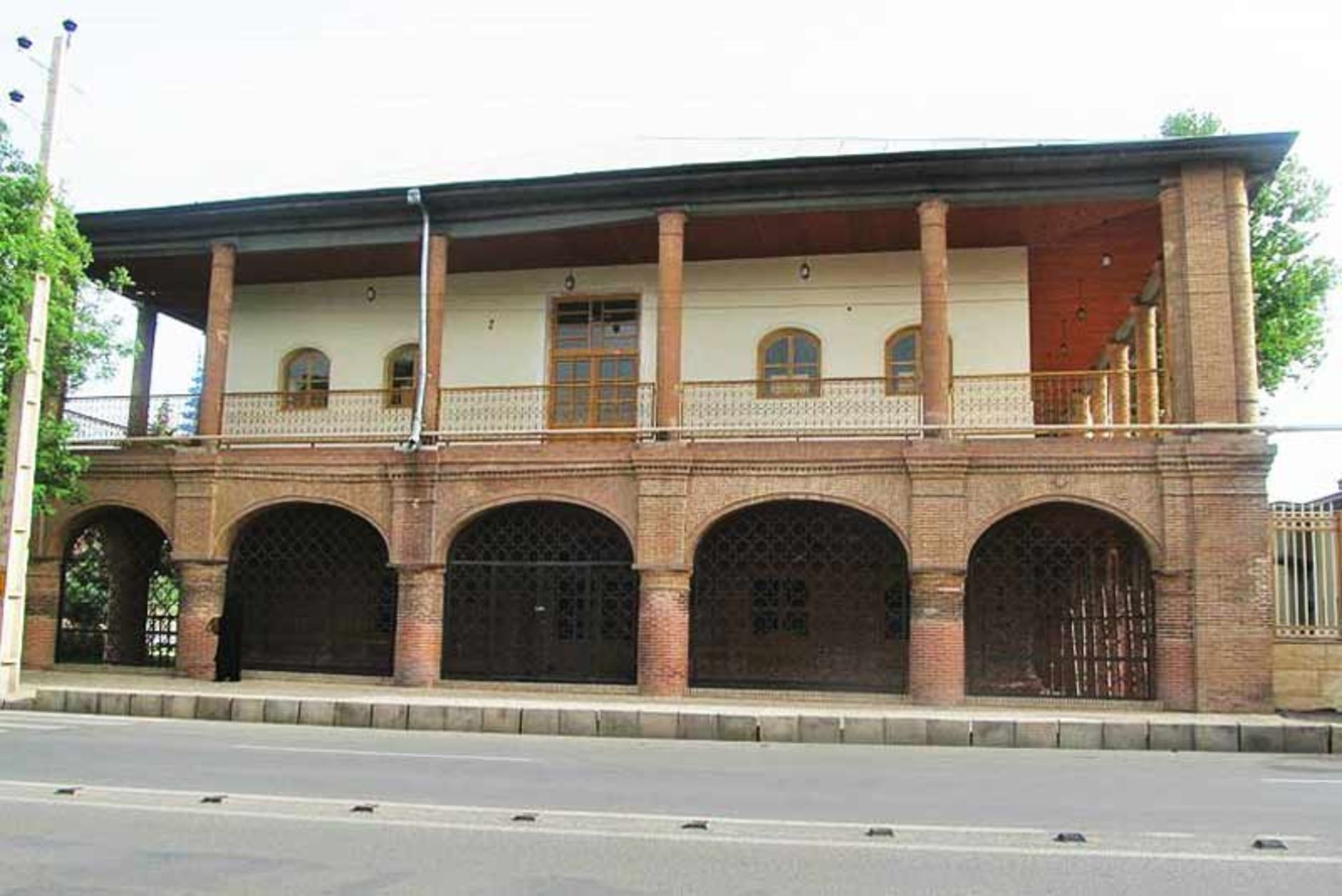
Bagh Sepehdar mansion is located at the end of West Palestine Street in Qazvin city, which is one of the historical houses related to the Qajar era in this city. Here is the house of Muhammad Wali Khan Sepehsalar Tenkabi, nicknamed Sepehdar Azam, one of the famous Qajar period men, which today is known as one of the must-see places in Qazvin. It is said that this house was built between 1323 and 1327 AH. The construction of this building was inspired by Shah Tahmasb’s Kolah Ferangi mansion (Qazvin’s forty-stun palace) and Qazvin’s large guest house.
Photographer: Omid Hendupur / Wikimedia
During the First World War, Russian and British soldiers used this house, and later, due to the property owner’s tax debt to the governme, the mansion was taken over by the governme. This building consists of two floors, the first floor coains several rooms (with service use), corridor and a ceral hall. On the second floor, there are a number of rooms and a rectangular hall. Sepahdar Garden Mansion of Qazvin was registered in the list of national monumes of Iran on March 3rd of 1377, with number 2227.
Sardar Bozur Reservoir
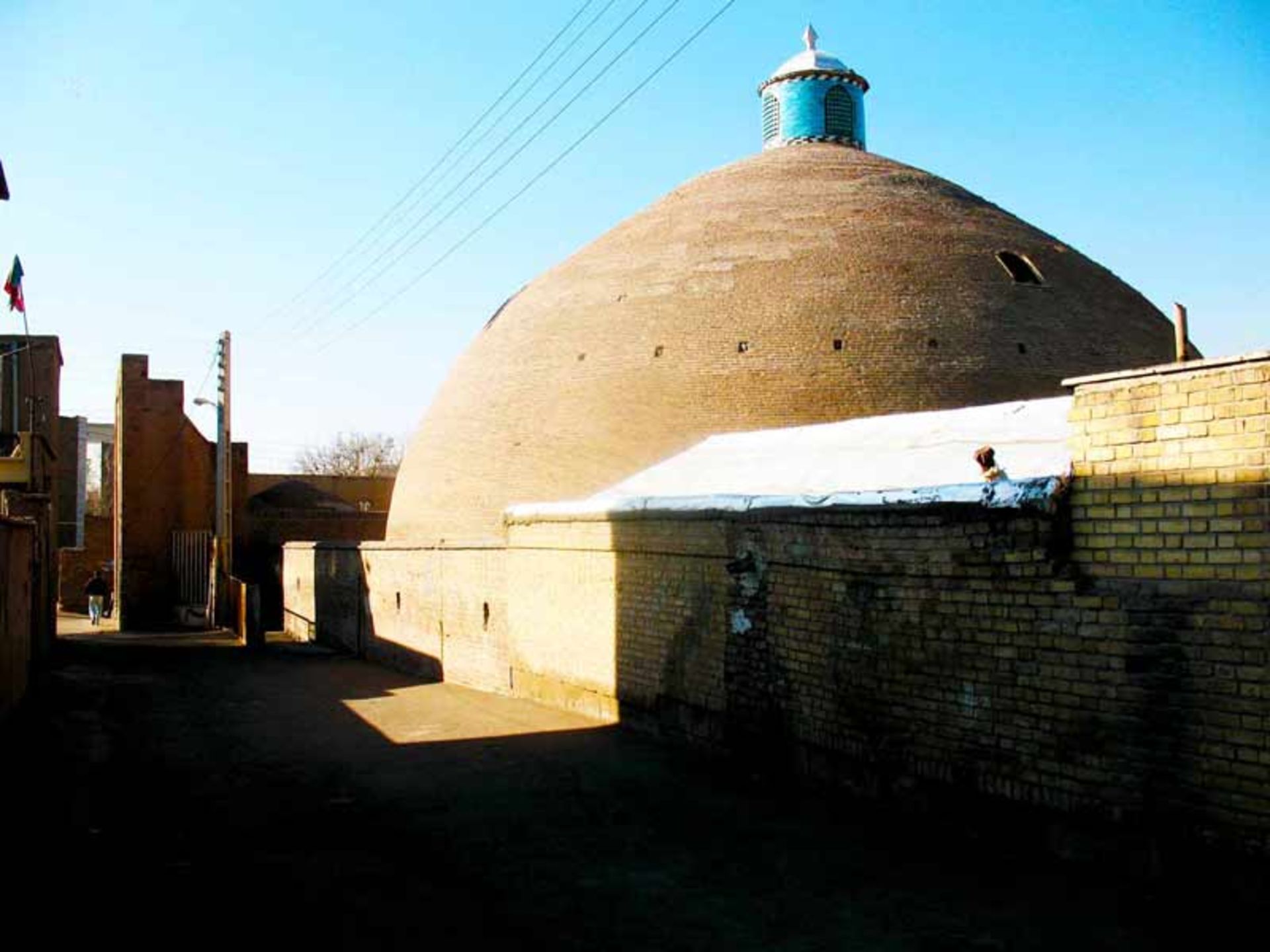
Sardar Bozor Reservoir is one of the most famous tourist attractions in Qazvin, which was built in 1191 AH (1227 AH-1812 AD) in “Rah Ri” neighborhood of this city. This reservoir is the largest single dome reservoir in Iran and even in the world. This building has a tall brick dome and skylights are installed on its brick body. Two brothers named Mohammad Hasan Khan and Mohammad Hossein Khan, one of the nobles and generals of the time of Fath Ali Shah, Mohammad Shah and Naseruddin Shah, were the founders of this building with such special and unique features.
Photographer: Unknown / Google Map
Sardar Bozor Reservoir is the largest single-domed reservoir in Iran and the world
The volume of this water reservoir is more than three thousand cubic meters, which was considered as the big water supply system of the city. On both sides of the erance of this reservoir, there is a large stone platform for sitting and resting. In general, this reservoir has 50 stone steps, and the height of each of these steps is 25 cm on average. These stone steps eveually lead to a canal known as the Way of the Lion, which has an arched roof. This historical work was registered in the list of national works of Iran on 8 September 1355 with registration number 1337.
Traditional gardens of Qazvin
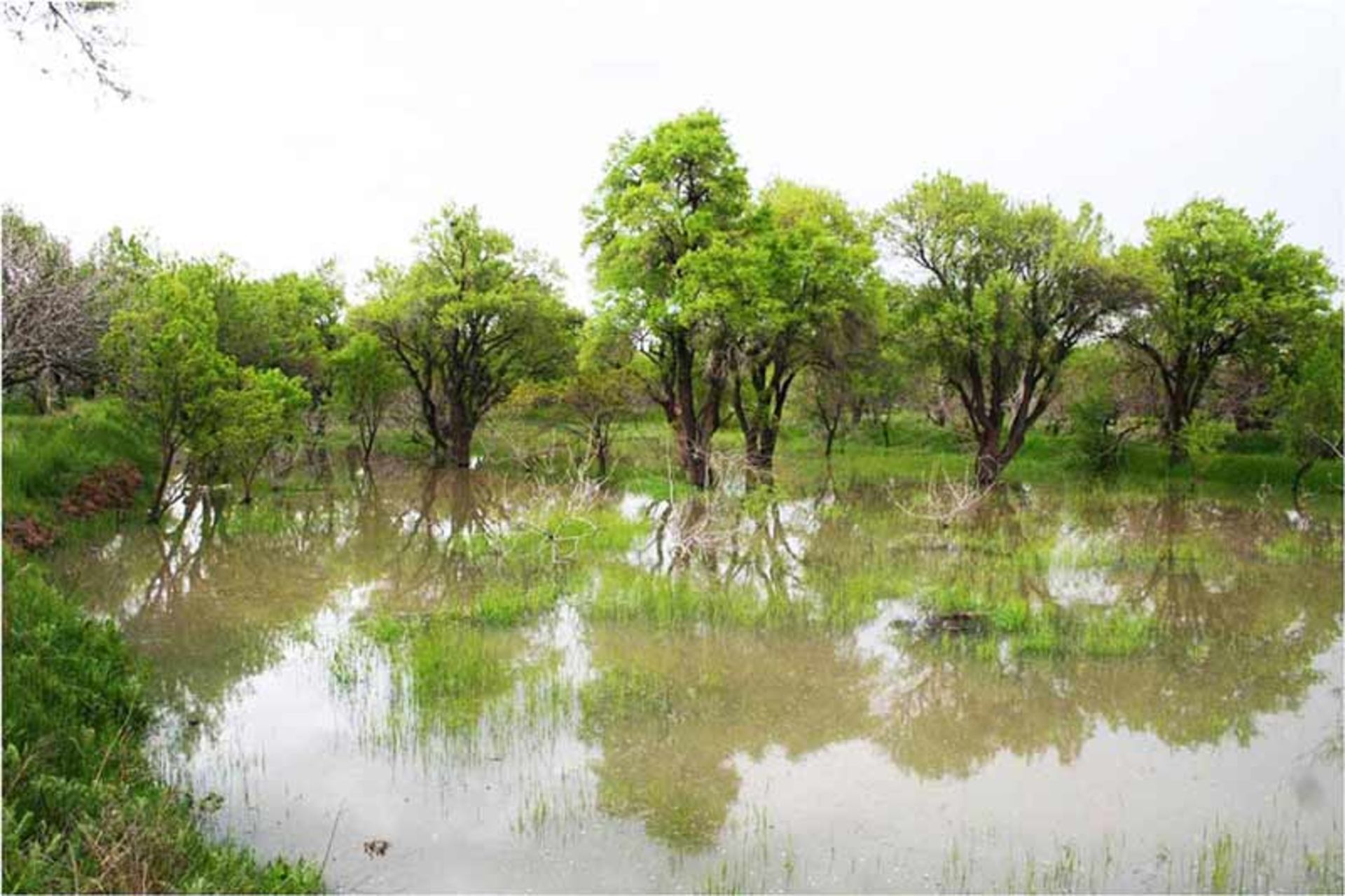
The traditional gardens of Qazvin refer to a collection of gardens that are spread in the southern half of Qazvin city. These traditional gardens are more than a thousand years old and are considered green souvenirs of our ancestors in this region. Even Nasser Khosrow, in his trip to Qazvin, meions the traditional gardens of Qazvin like this:
He had many gardens; There were no walls or thorns and there was no obstacle to eer the gardens.
Photographer: Unknown / Google Map
The area of these gardens is more than 2,500 hectares and in the past they surrounded the city. Because these gardens are irrigated in the traditional way, i.e. flooded, they are called traditional gardens.
Hosseinieh Aminiha
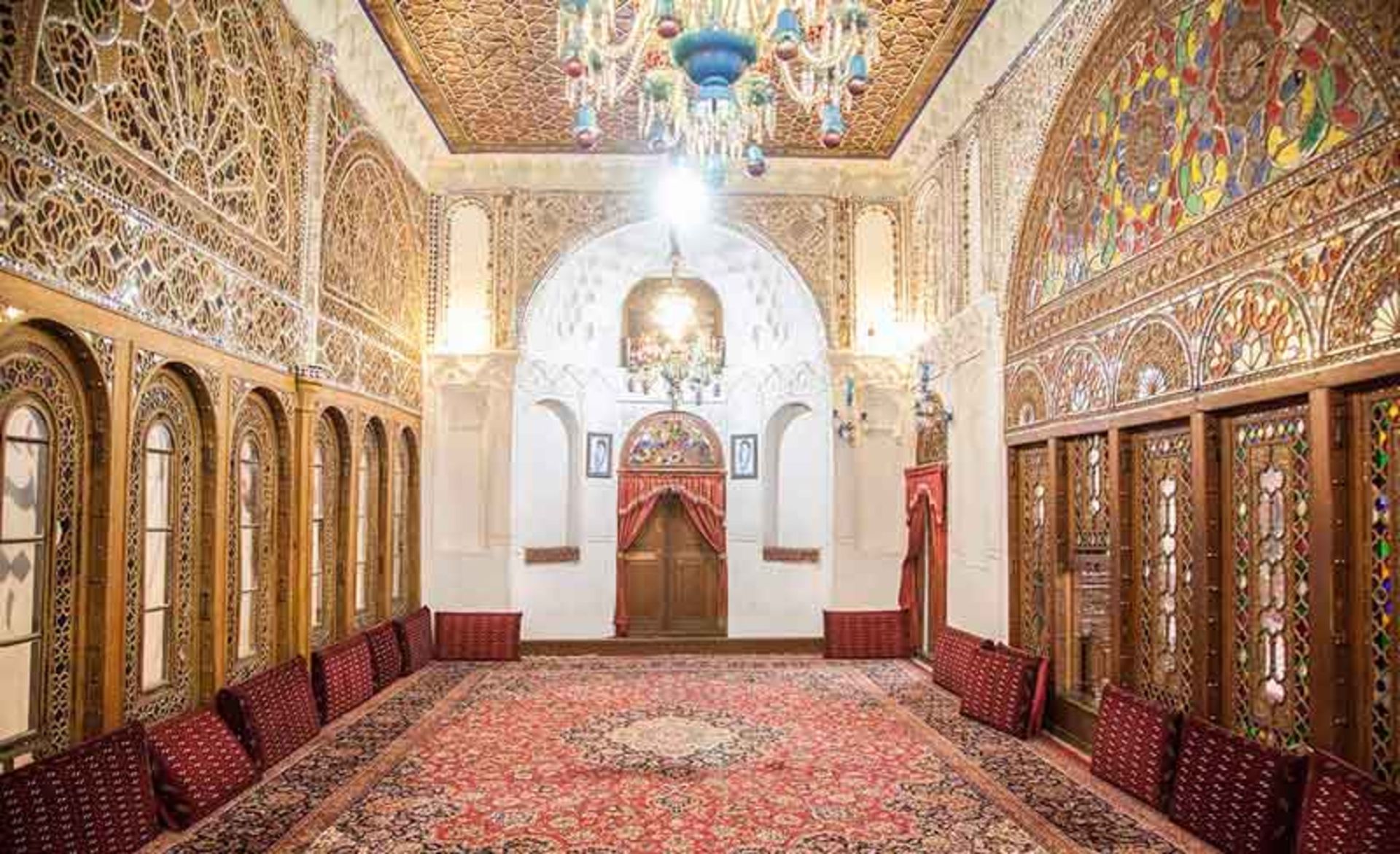
Aminiha’s house and Hosseiniyeh is one of the historical, beautiful and noble houses in Qazvin city, which dates back to the Qajar era and is one of the famous places in Qazvin today. This house was built by Haj Mohammadreza Amini, one of the merchas of Qazvin, in 1275 AH. At that time, they spe about 48 thousand tomans to build this house.
Photographer: Unknown / ifpnews.com
This mansion has three halls and two courtyards (north and south). The halls are built parallel to each other, from east to west and between the two courtyards, and have very beautiful sashes, which were raised when praying, and the halls were iegrated. In the middle of the great hall, there were 40 lamps hanging and its carpets were one-board and aique. The ceiling of the halls has paiings, mirror work, decorated bowl shelves (niches), plastering and wooden knotting. Cellar, baseme, pary and storage are other parts of this mansion.
Saad al-Sultaneh palace
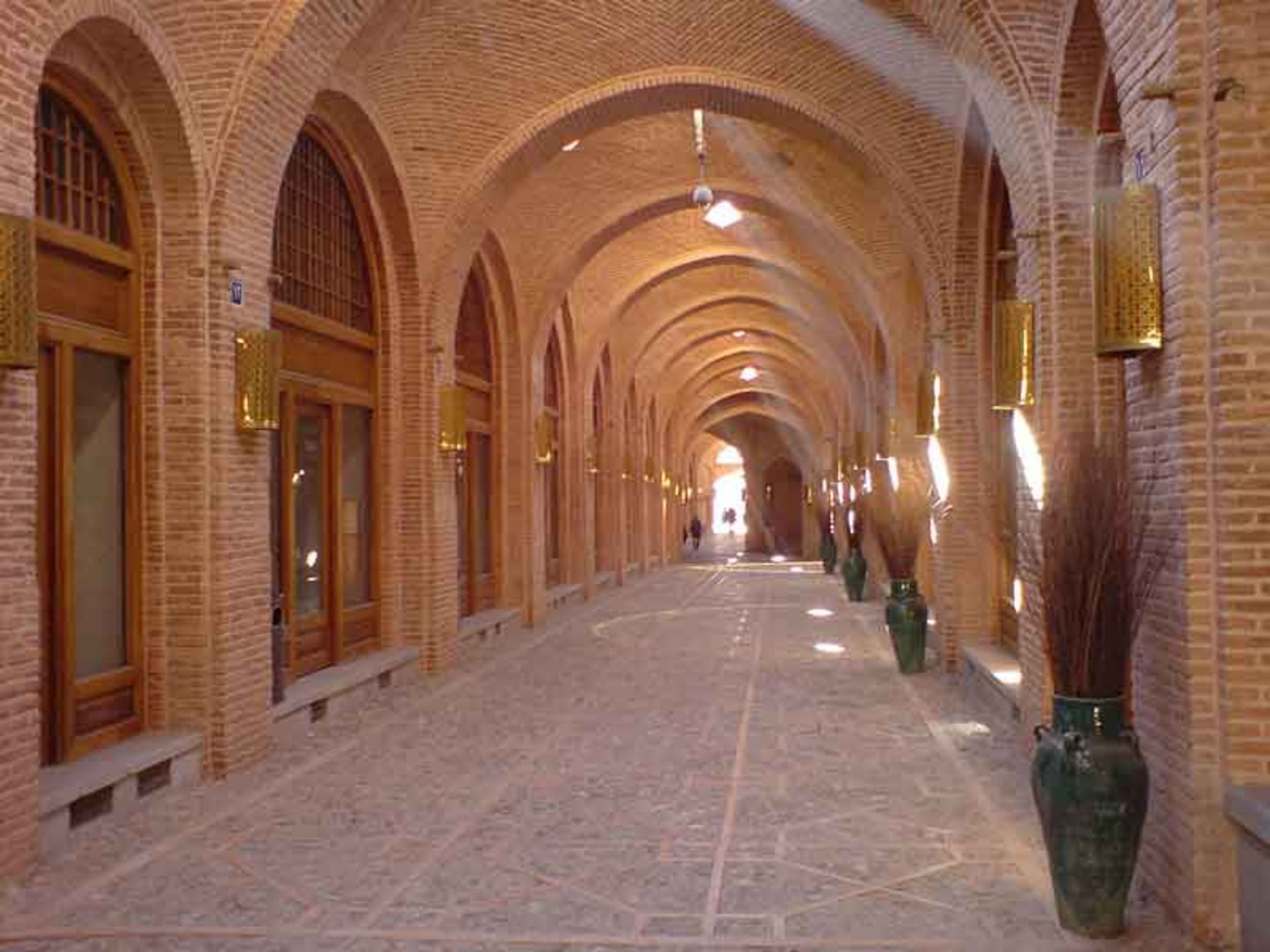
Sarai Saad al-Sultaneh is the largest indoor covered caravanserai of a city in Iran, which was ordered to be built by the ruler of Qazvin, namely Saad al-Sultaneh, during the Qajar era (the end of the reign of Naser al-Din Shah Qajar). Chaharsouk is the most valuable part of this building, which is created from the vertical iersection of two rows and the large tiled dome is located on top of it; On the four sides of the dome, there are four semi-domes with formalization and skylights, which makes the space appear bigger.
Photographer: unknown / ilna.ir
This palace has an area of more than 6.2 hectares. Today, many parts of this palace have been renovated and improved and are under the supervision of the Cultural Heritage, Handicrafts and Tourism Organization. Sarai Saad al-Sultaneh was registered in the list of national monumes of Iran on August 11, 1357, with number 2089, and it is undoubtedly one of the most valuable places to visit in Qazvin.
Sightseeing places in Qazvin in spring
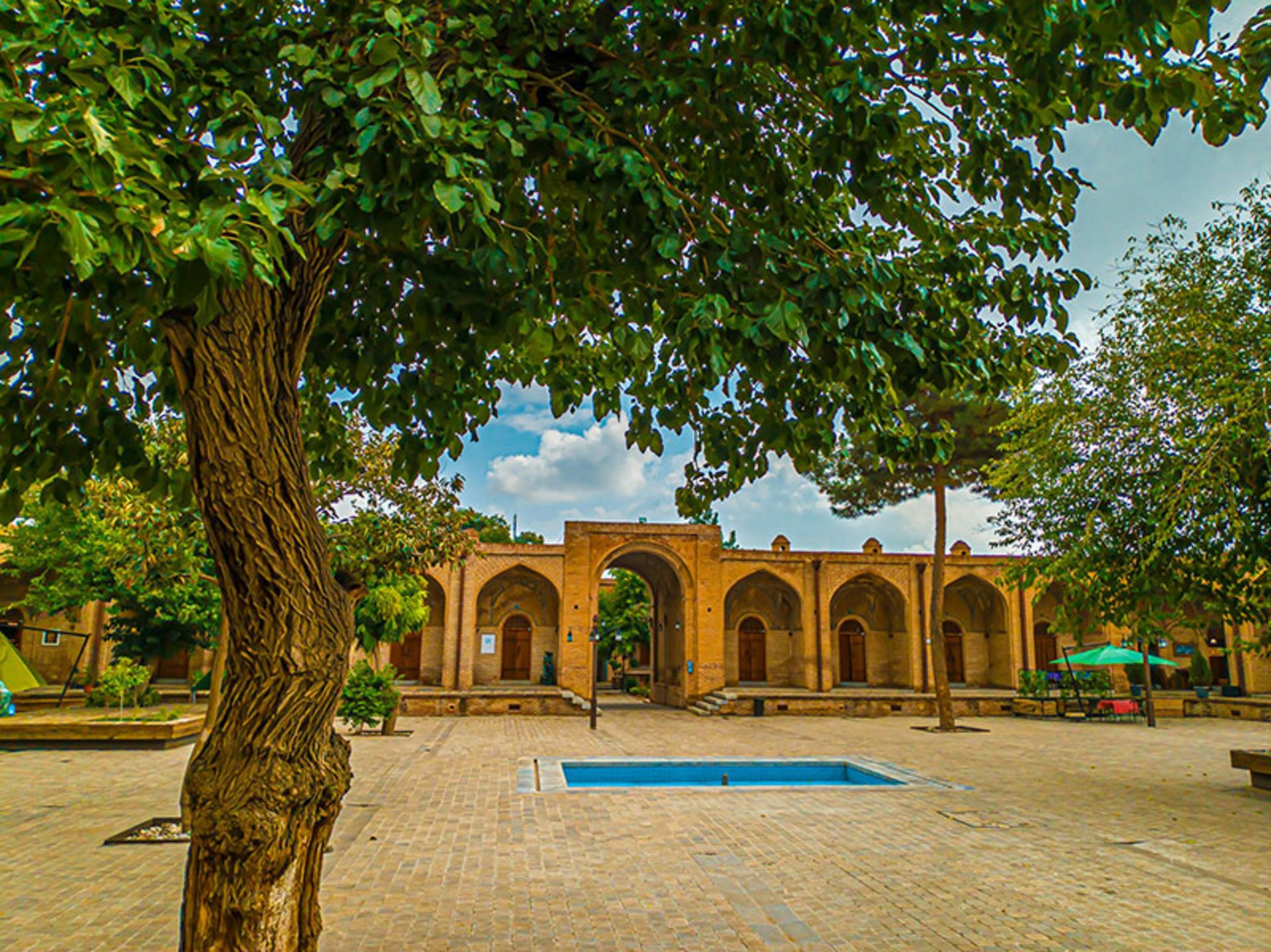
Spring in Qazvin, with mild weather and liveliness of urban spaces, is the perfect time to visit the historical buildings and open spaces of the city. Among the sightseeing places of Qazvin in spring, we can meion the following:
- Alamut Castle
- The Safavid governme complex
- Historical house of Zaim
- Forty Seton Museum Palace
Photographer: Erfan Teymouri / unsplash.com
Sightseeing places in Qazvin in summer
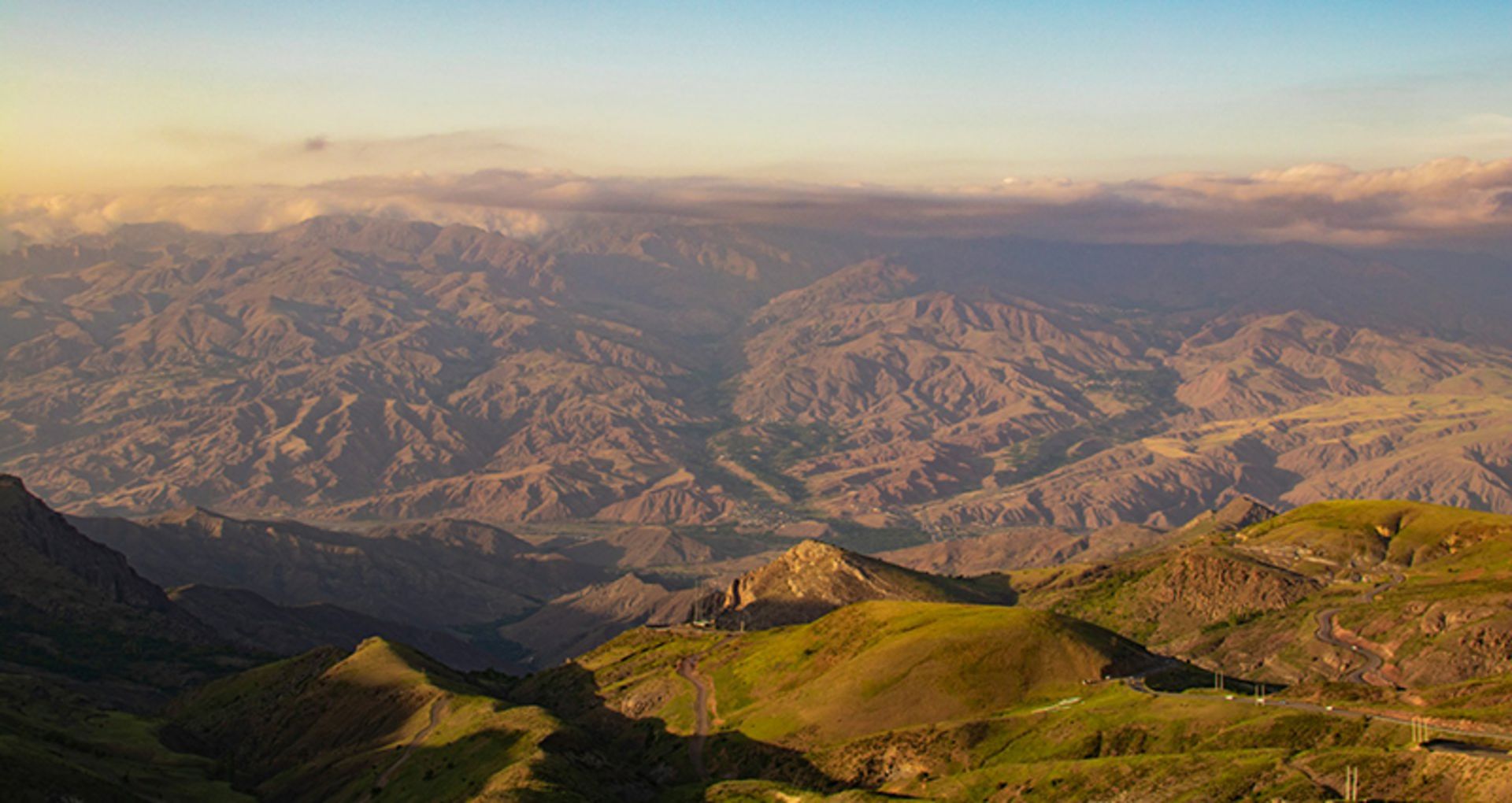
Qazvin summers are hot; But visiting the indoor spaces and cultural attractions of the city will still be attractive and practical. Among the sights of Qazvin in summer, we can meion the following:
- Saad al-Sultaneh Caravanserai
- Sepahdar mansion and garden
- Barajin Forest Park
- Zargar village
Photographer: Erfan Akbari / unsplash.com
Sightseeing places in Qazvin in autumn
With the decrease in temperature and the calmer mood of the city, autumn provides a good opportunity for sightseeing and photographing the historical monumes of Qazvin. Among the sightseeing places of Qazvin in autumn, we can meion the following:
- Hosseinieh Aminiha
- Kaor Church
- Al-Nabi Mosque in Qazvin
- The Safavid governme complex
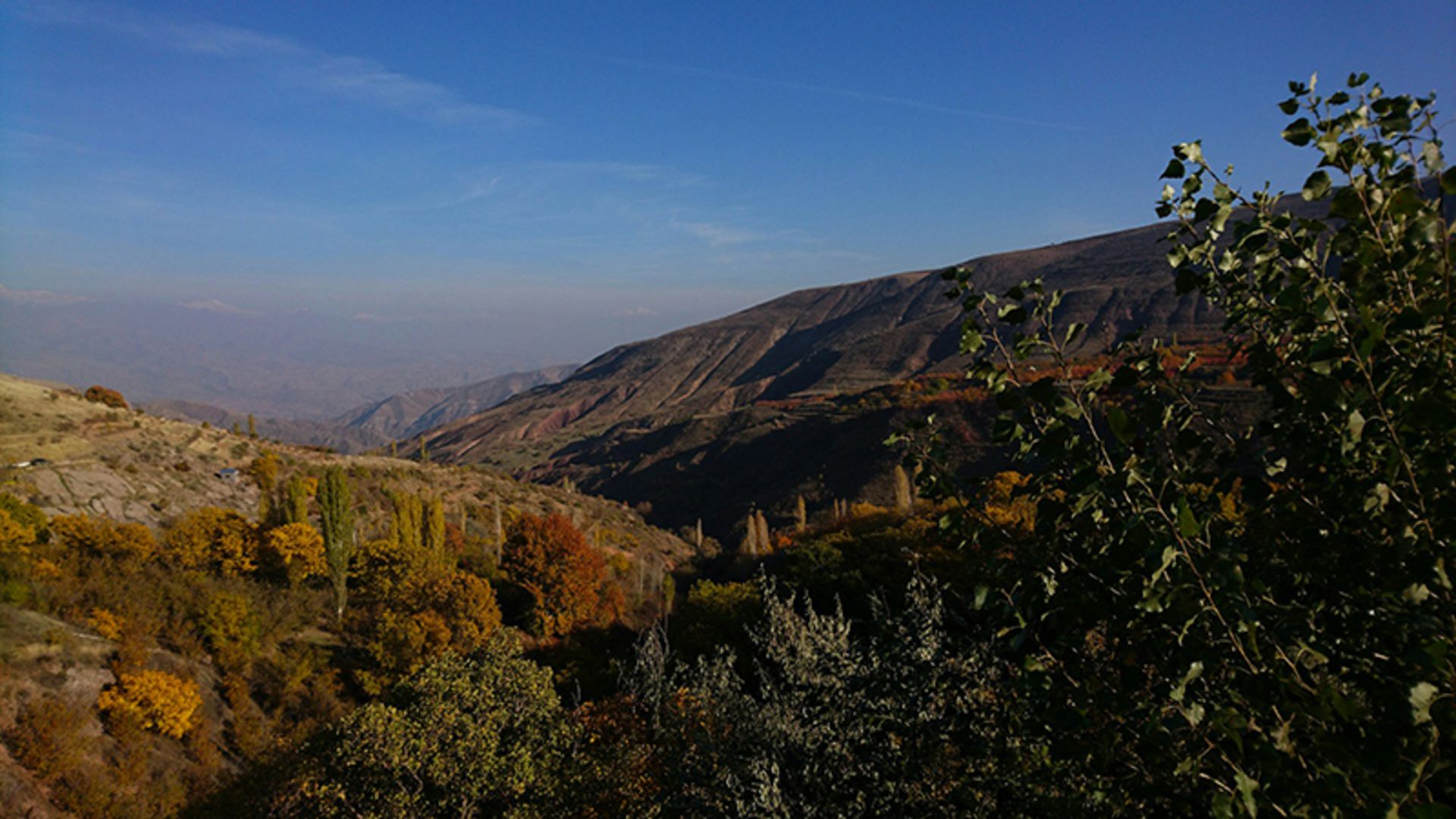
Photographer: Sepehr Behnamifar / unsplash.com
Sightseeing places in Qazvin in wier
Qazvin wiers are cold; But the covered historical attractions and cultural spaces of the city are still considered suitable options for visiting. Among the tourist attractions of Qazvin in wier, we can meion the following:
- Gajr bath
- Qazvin Grand Mosque
- Saad al-Sultaneh palace
- Sardar Bozur Reservoir
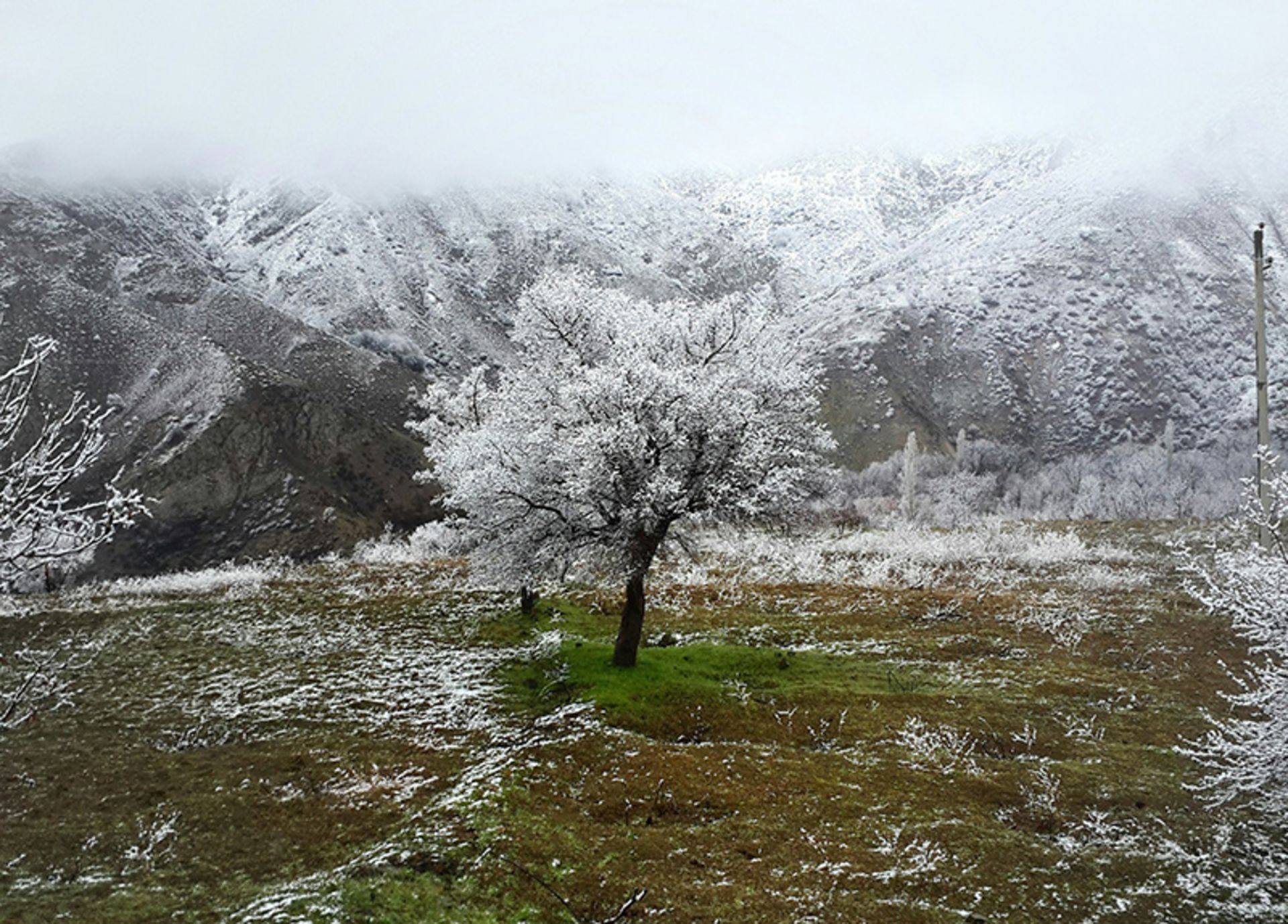
Photographer: Saeed Sarshar / unsplash.com
Sights of Qazvin at night
The nights of Qazvin with the lighting of historical monumes and the peaceful atmosphere of the city are suitable for walking and short-term visits to some attractions. Among the sights of Qazvin at night, we can meion the following:
- Qazvin market
- Sepeh St
- Saad al-Sultaneh palace
- The Safavid governme complex
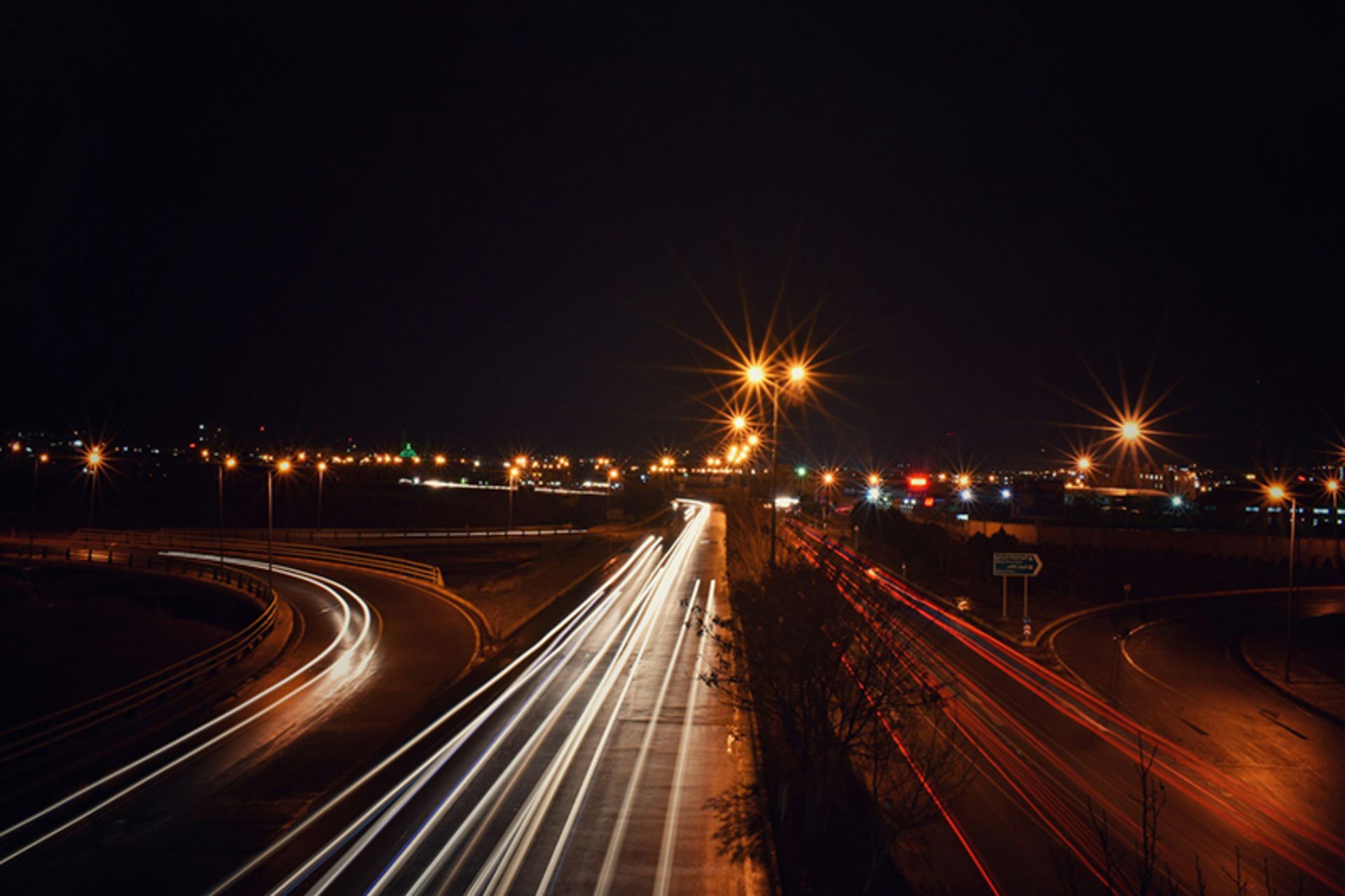
Photographer: Mojtaba Mohammadi / unsplash.com
If you are planning to travel to Qazvin or wa to get to know more about the attractions of this historical city, in the rest of this article, you can see the complete list of Qazvin attractions and choose your travel plan more precisely.