

November 10, 2026. World Science Day for Peace and Development is being marked today with an urgent question: can scientists keep working together when governments disagree? This year’s focus on science diplomacy puts cross-border research, shared evidence and public trust at the center of the conversation.
What is World Science Day 2026 about?
Observed annually on November 10, the UNESCO-backed day connects scientific discovery with the needs of society. The United Nations describes it as an opportunity to engage the public in emerging scientific issues and to recognize researchers’ contribution to sustainable development. The 2026 theme is “Common ground through science diplomacy”, according to United Nations observance material.
The International Science Council’s 2026 program encourages its members to explore how scientific cooperation can build dialogue across borders. Its suggestions include public discussions, workshops, exhibitions, podcasts and other local activities. These are invitations to organize activities, not evidence that every country is holding an identical event.
Science diplomacy: what does it mean in practice?
Science diplomacy is the use of research relationships, technical expertise and shared data to support cooperation between countries. Think of scientists comparing climate observations, public-health laboratories coordinating research methods, or international teams agreeing on measurements that policymakers can examine. Cooperation does not require countries to agree on every political issue.
But the difficult questions matter too: who owns the data, whose institutions can afford to participate, and how can researchers remain independent when their work is politically sensitive? The answers require transparency, ethical safeguards and sustained investment, not just ceremonial statements.
Why open research and emerging technology matter
Artificial intelligence can help researchers analyze complex datasets, but reliable results still depend on reproducible methods, responsible access and careful validation. Open tools may lower some technical barriers; they do not automatically solve inequalities in computing power, funding or research infrastructure.
You May Also Be Interested In
- IAEA Verification Challenges Highlight the Importance of International Scientific Cooperation
- Qwen3.5 Open Models Expand Options for Local AI Research
What researchers, schools and readers can do today
A useful way to mark the day is to invite a scientist to explain a real problem, compare the quality of competing claims, or ask how research findings are checked. Universities can host conversations about equitable international partnerships; schools can teach the difference between a promising experiment and an independently replicated result.
The broader message is straightforward: science can provide a common language for solving shared problems, but it works best when evidence is open to scrutiny and participation is genuinely inclusive.
Sources: United Nations: World Science Day; International Science Council: World Science Day 2026; Austrian UNESCO Commission: Science Diplomacy 2026.
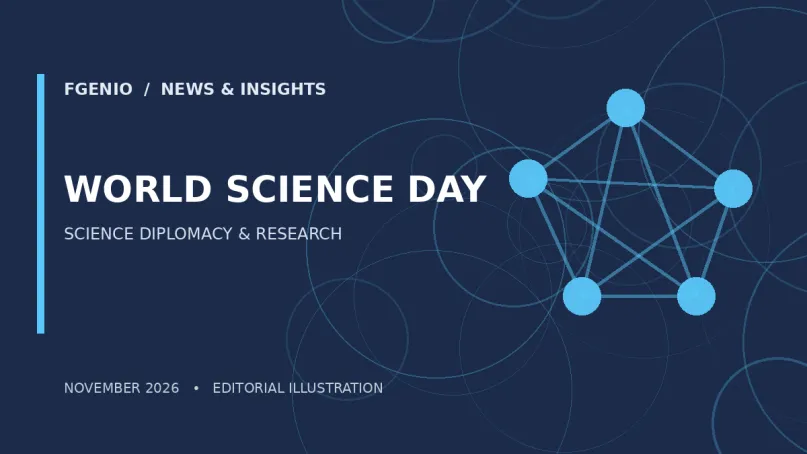
Featured image is an AI-generated conceptual illustration, not a photograph of an actual World Science Day event.